Promoting the Best Interests of the Child: Taking Responsibility Together
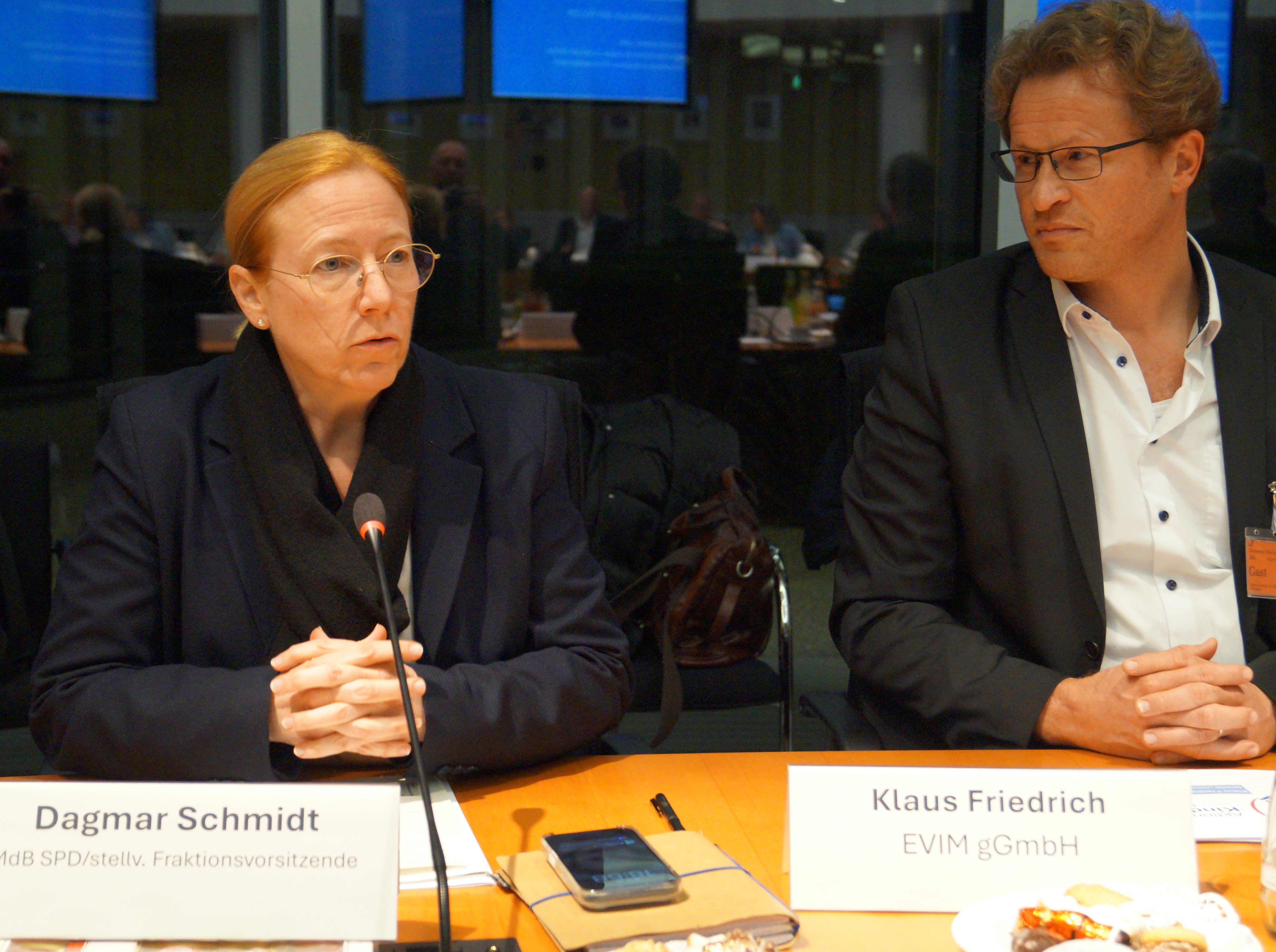
In October 2026, 22 diaconal and social service organizations joined forces to form the Action Alliance for Child Welfare in Hesse (as we reported). Now, together with the Action Alliance for Child Welfare in Schleswig-Holstein, the alliance has also sought political dialogue at the federal level. During a parliamentary evening at the German Bundestag on November 24, the focus was on the challenges and prospects for child and youth welfare. Klaus Friedrich, executive director of EVIM Jugendhilfe and one of the three spokespersons for the Action Alliance in Hesse, discusses the discussions in Berlin, necessary changes, and the next steps in an interview with EVIM.
The founding of the Alliance for Child Welfare in Hesse has garnered significant attention nationwide. How significant was the parliamentary evening in Berlin for this new alliance?
Klaus Friedrich: First of all, I would disagree—the alliance’s founding garnered significant attention throughout Hesse. The parliamentary evening offers us our first opportunity to present our concerns at the federal level, and it comes at a time when the reform of SGB VIII is being debated in the Bundestag and the Bundesrat. This is a great opportunity.
What were your expectations going into the trip to Berlin? Which issues and demands were the focus of the political discussions?
Klaus Friedrich: As a first step, it’s important to highlight the specific issues surrounding educational assistance and raise awareness of them. Our main demand is to improve the framework conditions in residential care. In addition, we’re advocating for a strengthening of the shared responsibility between public and independent providers at the local level. We want appropriate framework conditions for implementing tailored and more prevention-oriented support. For outpatient services, at a minimum, uniform standards must be established across the state. All those eligible for child and youth welfare services, particularly in the area of educational support, need equal opportunities for education and participation. Above all, it is crucial that local governments are not left to shoulder the financial burden alone.
The Action Alliance has formulated five core demands. Where do you see the most urgent need for action, and what improvements could be made in the short term?
Klaus Friedrich: All five demands are important. However, a fundamental shift in attitude on the part of public agencies would be essential: moving away from confrontation toward constructive cooperation. Daniel Thomsen, head of the Department of Youth, Family, and Education as well as the Youth Welfare Office in the District of North Frisia, fortunately spoke out in favor of such an approach at the parliamentary evening, representing the perspective of public agencies. At the same time, binding standards and framework conditions are needed, at least at the state level, and possibly even at the federal level. These could help eliminate the often difficult disputes at the local level and bring professional expertise and its concrete implementation back to the forefront.
Rising case numbers, more complex support needs, and a shortage of qualified professionals pose major challenges for child and youth welfare services. What potential solutions were discussed in Berlin?
Klaus Friedrich: We see the solution in more intensive networking and a more socio-spatially oriented approach, even across different legal jurisdictions. Of particular note here are the fields of medicine and psychiatry, as well as schools and daycare centers. The goal would be to adopt more preventive approaches in order to address crises in families at an earlier stage and thus, in the long term, reduce the need for residential care in particular.
Many decisions regarding child and youth welfare are made at the local and state levels. What concrete impact can federal policy have?
Klaus Friedrich: Yes, unfortunately, federalism is only of limited help in our field of work. However, the legal framework is established at the federal level. This is where the responsibility lies to shape the framework conditions as concretely and innovatively as possible. Furthermore, we see a problem in the funding structure of child and youth services. Here, too, we believe changes must be initiated by the federal government.
The Action Alliance in Hesse also draws inspiration from the Action Alliance in Schleswig-Holstein. What opportunities does cross-state cooperation offer?
Klaus Friedrich: We were able to model ourselves very effectively on the structures of the Action Alliance in Schleswig-Holstein, avoid beginner’s mistakes, and benefit from professional guidance. Our hope is to use this as a foundation to launch a nationwide movement. Because together, we are stronger.
What personal conclusions do you draw from the parliamentary evening? Were there any concrete signals or agreements, and what happens next?
Klaus Friedrich: The parliamentary evening was a complete success, but for now, it’s just the beginning. Unfortunately, the parties represented were mostly those that already share our perspective. Specifically, we need to engage more deeply in dialogue with the CDU, but we also need to win over the public to our cause. In our follow-up discussion, we’ve already discussed strategies for the various political levels—local, state, and federal. We feel strengthened in our commitment and will continue to advocate for the best interests of children. We’re receiving a great deal of encouragement for this, especially from the political sphere. Last but not least: Collaborating with our colleagues in Schleswig-Holstein and Hesse is a lot of fun, strengthens our networks, and fosters cooperation—a side effect that should not be underestimated.
Thank you very much, Mr. Friedrich, for the interview!