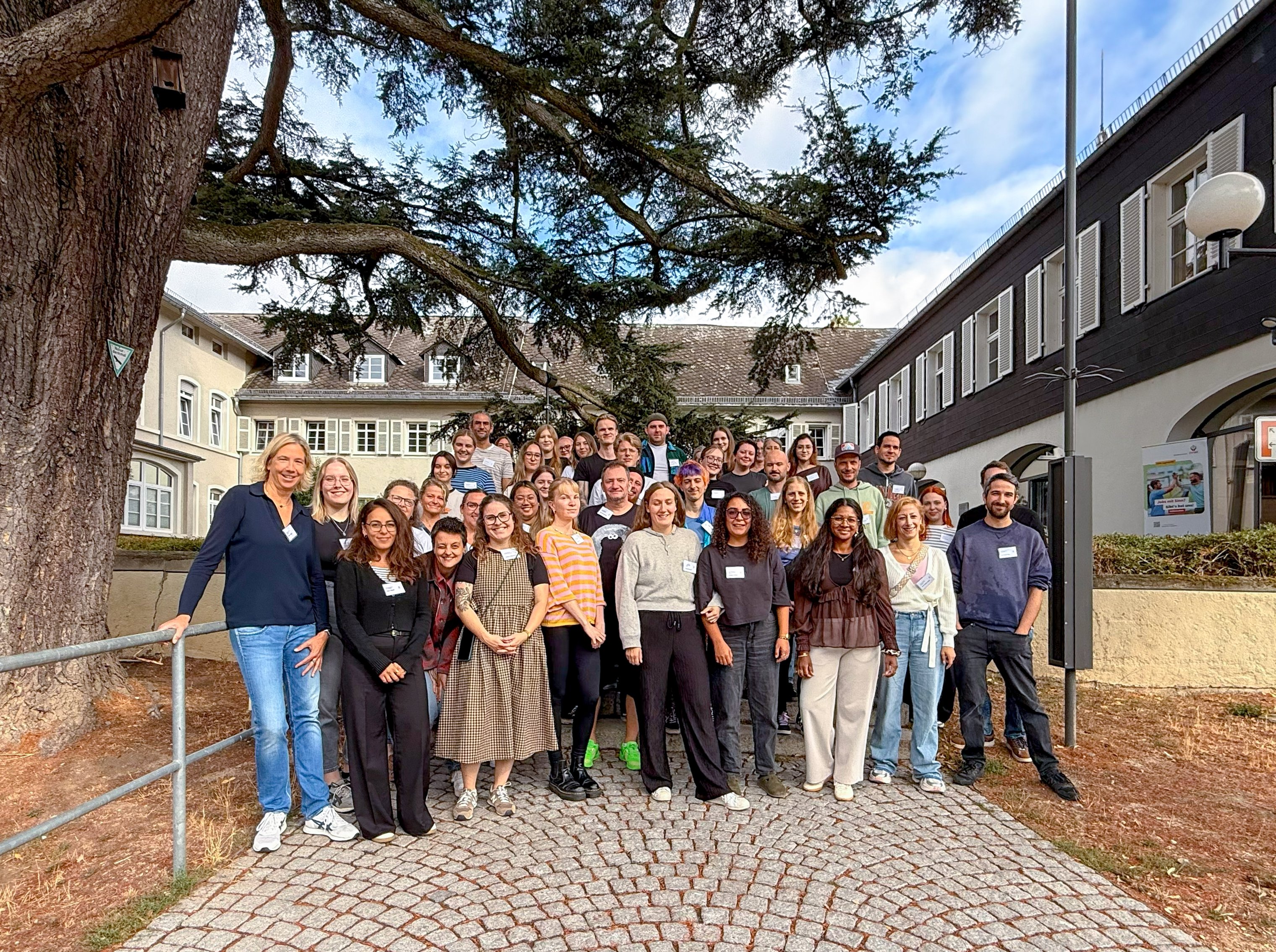
Training Day: Connect, Share, Keep Learning
In mid-September, EVIM Youth Services held its Training Day. In addition to the traditional welcome for new trainees and students, a farewell for those who had completed their practical training, and planning for the upcoming training year, the program this time also included professional development sessions.
As usual, the focus was on getting to know one another and having an initial exchange. In addition, participants gained insights into the topics “Dealing with Conflicts” with Jan Erfurth (anti-aggression trainer) and “EVIM Youth Services’ Safety Concept” with Laura Seidl (safety policy specialist). Both presentations generated a great deal of interest: many questions were asked, and frequent connections were drawn to the work in the care units.
Both topics will be explored in greater depth over the course of the training year. For the first time, an exclusive seminar on conflict resolution will be offered to trainees and students. A special format has also been developed to enable this target group to engage with protection policy topics in a practical way.
In addition, the regularly held Training Working Group provides a forum for all questions related to the practical training period. Here, students and trainees learn about the various care services offered by EVIM Youth Services. One person at a time takes the lead in presenting their placement facility and a specialized topic, and guides small groups through related assignments.
Trends:
A look at the numbers shows that the topic of practical training is a high priority at EVIM Youth Services: In 2025/26, 42 people completed their practical training, and in 2026/27, the number is expected to be 44.
The retention rate is high! Of the 15 individuals who earned state certification, a total of ten were hired as employees by EVIM Youth Services and EVIM Participation. In addition, six students took on part-time positions at EVIM Youth Services following their practical training semester.
It is evident that dual training programs are on the rise. Dual degree programs, in particular, are in increasing demand. While this does require a long-term financial and time investment—since the practical training periods are significantly longer—it increases the chances of thoroughly preparing the next generation for the realities of day-to-day youth welfare work and retaining them as employees with us. For this reason, we now collaborate with three different universities across regional boundaries.
The key to a successful internship or apprenticeship remains high-quality practical supervision, as well as regular training and ongoing support from the PeKo department. (ak)