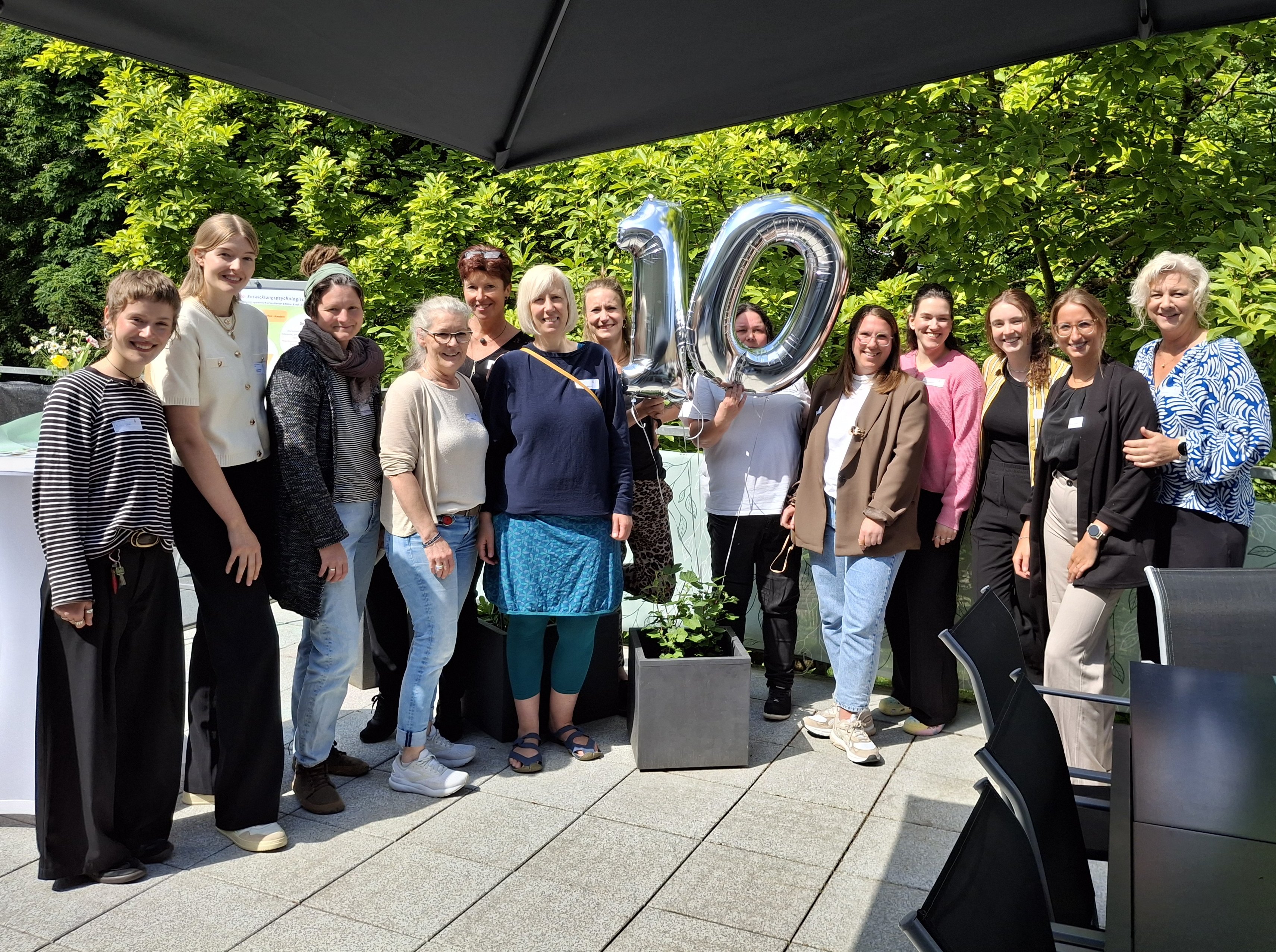
A safe haven for the little ones
In a nest, little ones are safe. That’s why it’s a very fitting name for an EVIM project that recently celebrated its tenth anniversary: NeSt stands for “New Start.” At an EVIM youth services facility located right next to Biebrich Castle Park, there are five spots for infants and toddlers whose parents need significantly more support after birth to properly care for their child.
This is where the institution officially known as the “inpatient clearinghouse” steps in. The referral comes from the hospitals where the mothers give birth. There, staff may notice that the child’s well-being is likely at risk—due to substance abuse, violence, mental instability, neglect, or financial hardship. The Youth Welfare Office is then notified and can contact EVIM.
Competent Care
However, there are also cases in which the child comes to “NeSt” later on: One such example was a three-month-old infant who had been shaken, which is extremely dangerous. This family was also put in contact with NeSt and received competent care here. This program is an initiative of this organization and is unique in Wiesbaden and the surrounding area. Here, the child is not initially separated from the parents. The child is placed in the Haus am Schlosspark, where each family has its own beautifully furnished room, and the parents can and are encouraged to spend the day with their child. At night, they go home, and the child sleeps safely in the supervised environment. This period can last up to six months. During this time, professional work is done with the parents, and many discussions take place. The prerequisite, says Regional Director Natalie Bachmann, is “a willingness to change with regard to parenting skills and a precarious living situation.” This means a minimum level of insight and that the mother and father are willing to make an effort to build a family life.
What happens next?
Once the six months are up, says NeSt team leader Simone Passet, there are various options for how the family can move forward: “About a quarter can then live together as a family but receive outpatient support. Another quarter then lives as a family in a residential parent-child facility. About half are then placed in a temporary or permanent foster family.” Over the past ten years, around 140 families have been supported in this way. So while success isn’t always guaranteed, the support provided is always empathetic, expert, and attentive, with the child’s well-being always at the center. It always begins in a crisis situation. “What makes this special is that there is no severing of the bond. We observe how parents and children interact and pay attention to the child’s ‘subtle cues,’” says Natalie Bachmann. The daily routine at “NeSt” includes eating together, trips to the nearby playground in the castle park, and frequent conversations and counseling sessions. The five families in care at any given time stay in touch with one another and can play and talk together in a large living room and on a spacious terrace. Meals are shared as a large group. In later phases, it’s also possible for parents to stay overnight with their child. Existing resources are strengthened, support needs are assessed, and skills are developed.
Sustainable Approach
“Early intervention is a sustainable approach: it protects the child and at the same time gives parents a real chance to take responsibility and find their way with support,” emphasizes Natalie Bachmann. The Wiesbaden Youth Welfare Office is very pleased with this opportunity that has been created in Wiesbaden. According to office employee Kristina Thomas, it is firmly anchored in the state capital’s youth welfare services. “We’re very lucky in that regard.” Over the course of its existence, the staffing ratio has even been increased. “It’s a great opportunity that parents here always have someone by their side whom they can ask for help,” says Manuela Semmler, also an employee of the Youth Welfare Office. Currently, around 18 professionals work around the clock at NeSt in the Haus am Schlosspark, including housekeeping staff. Even the challenging COVID-19 period was handled well. It’s no easy task, the staff members say. “You have to give a lot here.” But it’s worth it, because children and parents are given real opportunities here to live together as a family. (abp)